
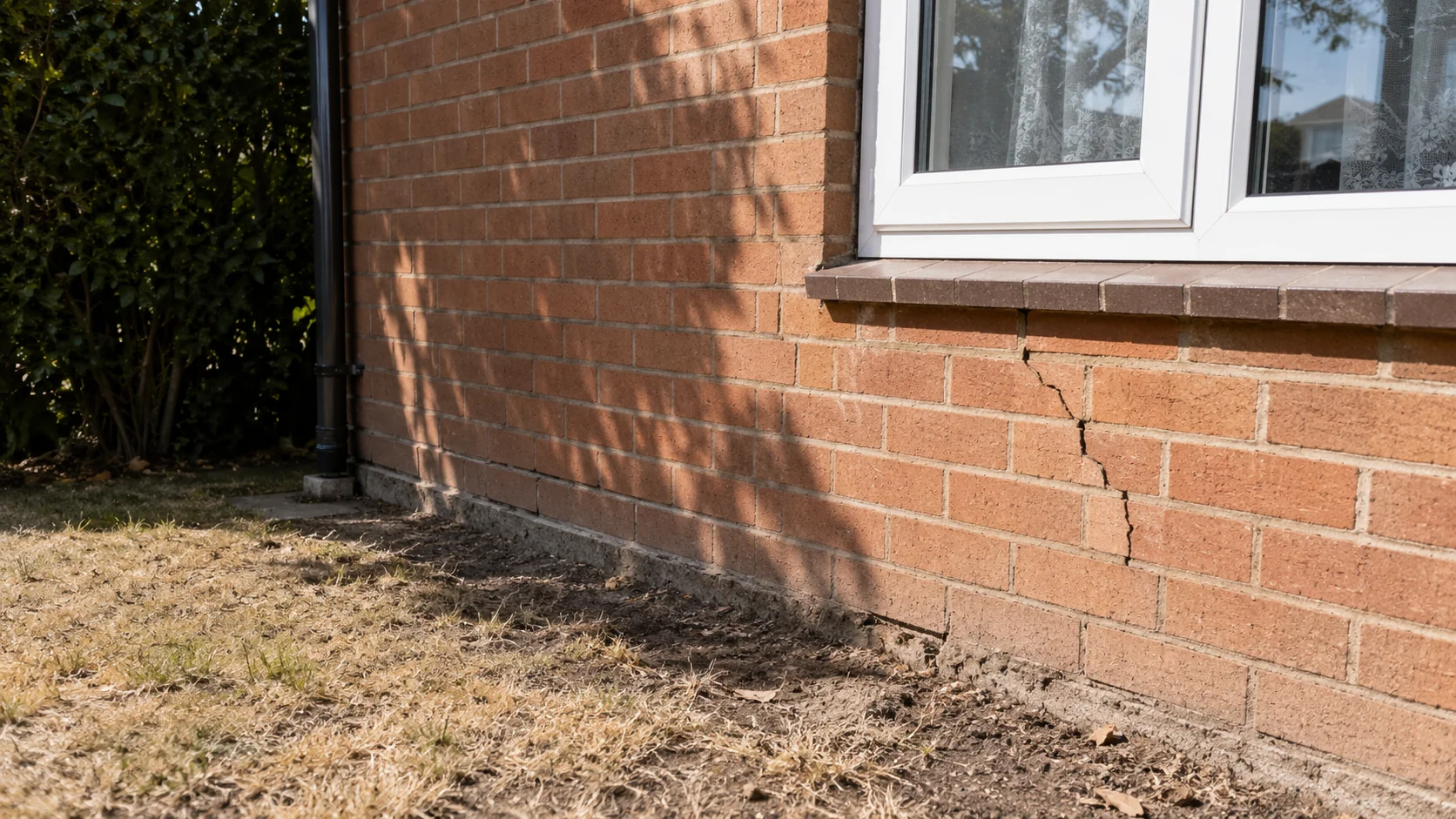
After a period of unusually hot weather, many homeowners begin to notice small changes around their property. A door that used to close easily may start to stick. A hairline crack may appear around a window. Existing cracks may seem more visible than they were a few weeks ago.
In many cases, these signs are minor and do not mean there is a serious structural problem. Buildings naturally move over time as materials expand, contract and respond to changes in temperature and moisture.
However, after prolonged heat or dry weather, some cracks are worth taking more seriously, especially in areas with shrinkable clay soils, mature trees, older properties or previous structural alterations.
So how can homeowners tell the difference between normal seasonal movement and something that may need a structural inspection?
Why hot, dry weather can affect buildings
The ground beneath a property is not always static. Certain soils, particularly clay soils, can shrink when they dry out and swell again when moisture returns. This seasonal change can affect how the ground supports a building.
Where movement is small and even, it may not cause a significant issue. Problems are more likely when movement is uneven, concentrated in one area or linked to other factors such as nearby trees, leaking drains or older foundations.
Common contributors include:
- Clay soils shrinking during dry periods
- Mature trees drawing moisture from the ground
- Shallow foundations in older buildings
- Extensions built at a different time from the original house
- Leaking or damaged drains affecting ground conditions
- Previous wall removals, chimney removals or structural alterations
- Poorly supported openings around doors, windows or extensions
The visible crack is often only the symptom. The important question is what is causing the movement behind it.
Why this matters in London, East Anglia and the Midlands
Many parts of London and the South East are built on clay soils that can be sensitive to changes in moisture. Similar issues can also occur across parts of East Anglia, the Midlands and other areas where local ground conditions, trees and older housing stock increase the likelihood of seasonal movement.
This does not mean every crack is subsidence. It does mean that the location, pattern and behaviour of a crack should be considered carefully.
A fine plaster crack in one room may simply be cosmetic. A diagonal crack that runs through internal plaster and external brickwork, especially near a door or window, may need closer investigation.
Cracks that are often less concerning
Not every crack requires urgent action. Some cracks are common in homes and may be linked to normal shrinkage, decoration, plastering or minor thermal movement.
Lower-risk signs may include:
- Fine hairline cracks in plaster only
- Cracks around plasterboard joints
- Minor cracks after recent refurbishment
- Cracks that have not changed over time
- Isolated surface cracking with no matching external damage
Even with minor cracks, it is sensible to keep a simple record. Take a clear photograph, note the date and check whether the crack changes over the following weeks or months.
Warning signs homeowners should not ignore
Some signs are more likely to justify professional advice, particularly if they appear suddenly, worsen over time or affect both the inside and outside of the property.
You should consider arranging a structural inspection if you notice:
- Diagonal cracking around doors or windows
- Cracks that are wider at one end than the other
- Cracks visible internally and externally in the same area
- Doors or windows that suddenly begin to stick
- Uneven or sloping floors
- Cracks reopening after being repaired
- Cracking near an extension, bay window or chimney breast
- Movement close to mature trees
- Cracks near drains, manholes or areas of poor drainage
The pattern of cracking is often more important than the size of one crack. A structural engineer will look at the whole building, not just the damaged area.
Why extensions and older homes need extra care
Older homes often have shallower foundations than modern buildings. Many have also been changed over time through extensions, loft conversions, chimney removals, internal wall removals or new openings.
These changes can affect how loads move through the structure. They can also create junctions where the original building and the newer work behave differently.
For example, a rear extension may have deeper or newer foundations than the original house. During seasonal ground movement, the two parts of the building may respond differently, causing cracks where they meet.
This does not automatically mean the extension has failed, but it does mean the cause should be understood before repairs are carried out.
Do not rush to fill and paint over cracks
One of the most common mistakes is to repair cracks cosmetically before understanding why they appeared.
Filling and decorating may make the wall look better temporarily, but it can hide useful evidence. If movement continues, the crack may simply return.
Before carrying out cosmetic repairs, it is worth asking:
Has the crack appeared recently?
Is it getting wider?
Is it visible on both sides of the wall?
Are doors or windows sticking nearby?
Is there a tree, drain or extension close to the affected area?
Has any structural work been carried out in the past?
If the answer to any of these is yes, a structural opinion may save time and uncertainty later.
What a structural engineer will assess
A structural inspection is not just about saying whether a crack is serious. It is about understanding the likely cause and recommending the right next step.
Depending on the property, a structural engineer may consider:
- The age and construction type of the building
- The location, width and direction of cracks
- Whether cracking is internal, external or both
- Nearby trees and vegetation
- Drainage routes and possible leaks
- Previous extensions or alterations
- Known ground conditions in the area
- Whether the movement appears historic, seasonal or ongoing
Sometimes the recommendation may be simple monitoring. In other cases, further investigation may be needed, such as drain surveys, trial pits, foundation checks or repair design.
Buying, selling or renovating a property with cracks
Cracking can become a major source of concern during a sale, purchase, insurance discussion or renovation project.
For buyers, a structural inspection can help distinguish between cosmetic cracking and movement that may require further investigation.
For homeowners, a clear structural report can help explain the issue before repair works are undertaken.
For architects, contractors and developers, early engineering advice can reduce the risk of unexpected problems once works begin on site.
Practical steps if you notice cracks after hot weather
If you are concerned about cracking or movement, start with a simple record.
Take photographs, measure the widest part of the crack, note the date and look for related signs such as sticking doors, uneven floors or external cracking.
Avoid making assumptions too quickly. Cracks can be caused by many different factors, including thermal movement, historic settlement, drainage issues, tree influence, foundation movement or previous alterations.
Where cracks are significant, changing or linked to other warning signs, arrange a structural inspection before carrying out repairs.
How JMS Engineers can help
JMS Engineers provides structural inspections, reports and design advice for homeowners, architects, developers and property professionals across London, East Anglia, the Midlands and beyond.
Whether you are concerned about cracking after hot weather, planning an extension, buying a property or trying to understand movement in an existing building, our engineers can provide clear and practical advice.
A crack does not always mean there is a serious structural problem. But understanding the cause early can help avoid unnecessary repairs, delays and uncertainty.
Concerned about cracks or movement in your property? Contact JMS Engineers to arrange a structural inspection.